
Why Her Neck Pain Kept Coming Back
Michelle, a 35-year-old accountant, presented to Total Body Physio with an acute flare-up of recurrent neck pain following an interstate flight and carrying a heavy bag through the airport.
Her neck became progressively more painful through the day and by the next morning she felt almost “locked up”.
However, this wasn’t a new problem.
Michelle had experienced pain in the same area on and off for around 10 years. Previous physiotherapy had successfully settled each episode, but the pain would return a few months later. In her own words, she felt the problem had “never been properly addressed” despite symptoms resolving each time.
Her goal was not simply to make this flare-up go away.
She wanted to:
- Reduce future flare-ups
- Return to full Pilates and yoga
- Perform crunch-position exercises without neck pain
- Carry 15 kg in each hand without symptoms
- Have a rehabilitation program she could maintain long term

THE ASSESSMENT: LOOKING BEYOND WHERE IT HURTS
For people experiencing recurrent neck pain, looking beyond where it hurts can reveal important contributing factors.
Michelle had several findings around her neck:
- Reduced and painful cervical movement
- Significant upper cervical stiffness
- Tightness through the upper trapezius and levator scapulae muscles running from the neck into the shoulder blade
- Reduced endurance of the deeper muscles supporting the neck
- A trigger point in the upper trapezius reproduced the headache she occasionally experienced behind her eye.
- Importantly, her neurological screening was normal.
But the assessment also identified a significant issue around her shoulder and shoulder blade.
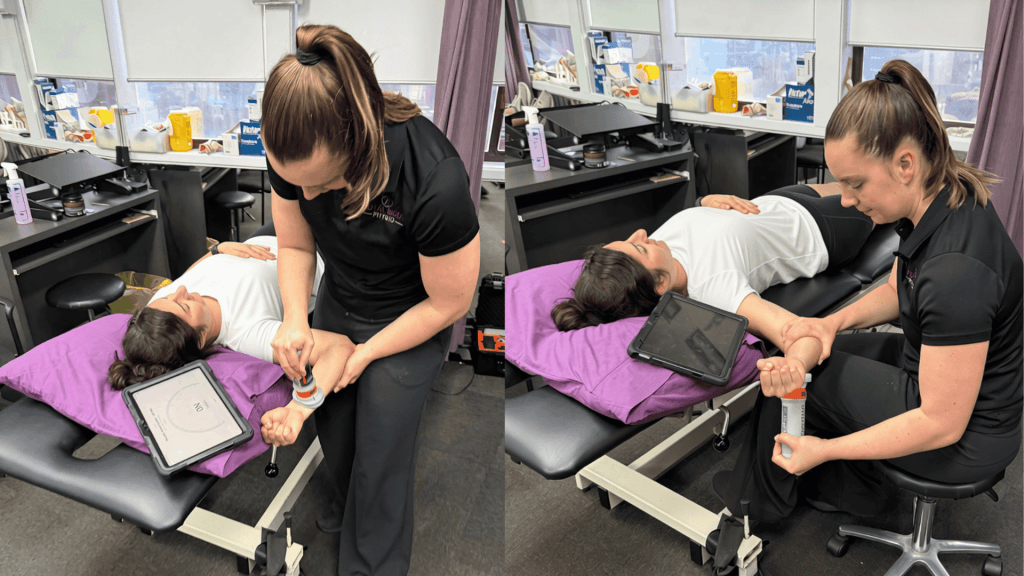
Michelle’s shoulder blade wasn’t moving normally. When she lifted her left arm, the shoulder blade winged away from the ribcage and began hitching upwards early, signs of muscular compensation. She reported a previous history of a left shoulder problem. This led us to assess her shoulder strength using VALD objective strength testing.
The results were particularly interesting.
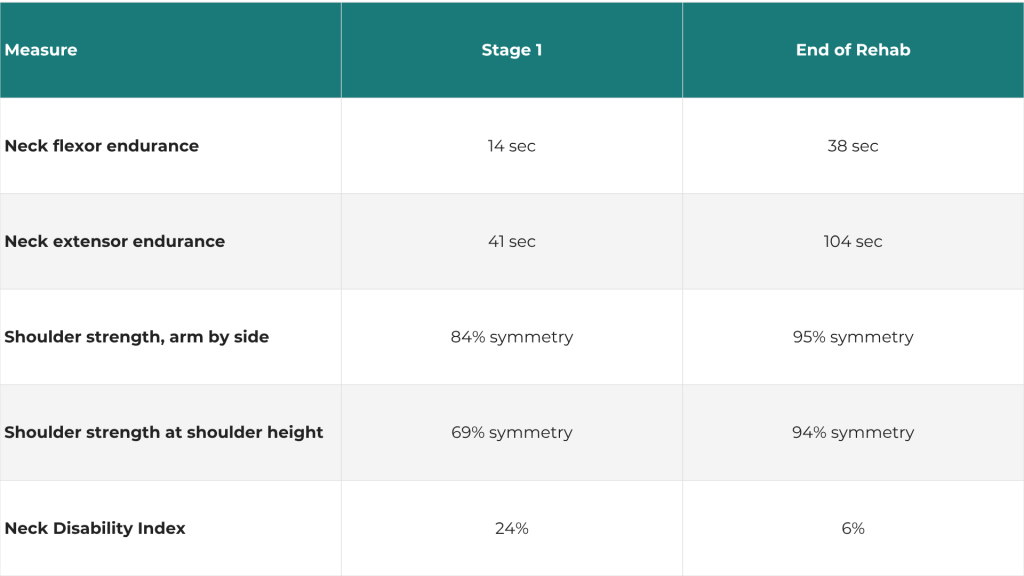
Shoulder strength with arm by her side: 84% symmetry when compared to her right
Shoulder strength at shoulder height: 69% symmetry when compared to her right
So while her strength looked relatively reasonable with her arm by her side, a much larger deficit appeared when the shoulder was tested in a position that was much more relevant to her life. Michelle loads herself in this position during Pilates, yoga, reaching overhead, carrying bags and lifting luggage. So although her neck was where she felt the pain, it was becoming clear that the neck may not have been the only thing we needed to treat.
This changed the direction of her rehabilitation.
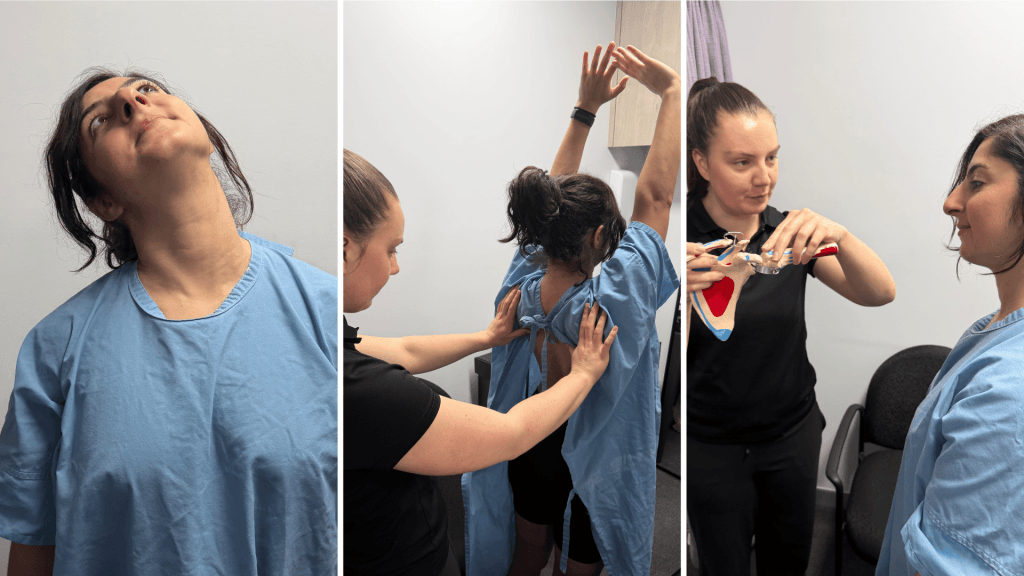
COULD HER SHOULDER BE CONTRIBUTING TO HER RECURRENT NECK PAIN?
The shoulder blade provides an important platform for movement of the arm.
In Michelle’s case, the rotator cuff and scapular muscles appeared to lack sufficient strength and control in more demanding positions. Her upper trapezius appeared to compensate when her arm was elevated.
This did not stop her from functioning. In fact, compensation can allow someone to continue doing the activities they enjoy. But it may also mean that the same muscles around the neck are repeatedly being asked to do more work. This provided a plausible contributing factor to Michelle’s recurring symptoms.
Importantly, this does not mean her shoulder was definitively the “cause” of her neck pain, but it certainly appeared to be an important piece of the puzzle. Neck pain is multifactorial, and the assessment helped identify physical factors that were potentially contributing to her recurrent presentation.
WHAT DOES THE RESEARCH SAY?
Recent evidence supports looking at the relationship between the neck and scapula in people with persistent or recurrent neck pain.
Javdaneh et al., (2025) found in a systematic review that people with chronic neck pain commonly demonstrate altered scapular movement. Chen et al. (2024) also found that scapular-focused treatment improved pain intensity in people with chronic neck pain. However, improvements in neck disability were less consistent, highlighting that scapular rehabilitation should be considered as part of an overall rehabilitation program rather than a standalone solution.
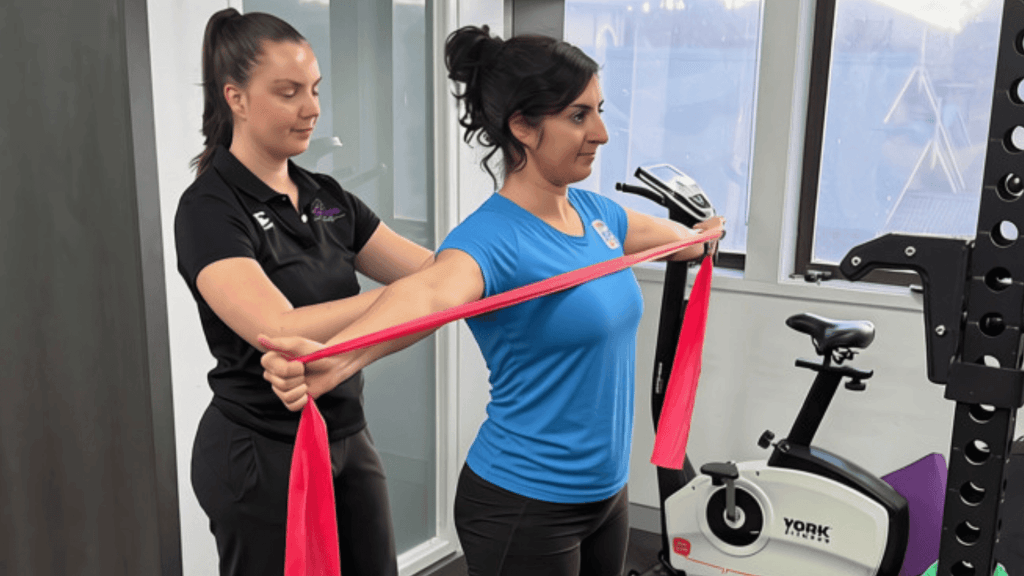
WHY DID PREVIOUS TREATMENT HELP BUT NOT LAST?
This was one of the most important parts of Michelle’s case. Previous treatment had worked. Her pain settled, her movement improved and she returned to normal activities. But the underlying strength, endurance and capacity deficits appeared to remain.
There is a difference between: Making something feel better & Building enough capacity to tolerate the demands placed on it.
Manual therapy can be valuable for reducing pain, improving movement and helping someone return to exercise. But for a recurrent problem, we also need to progressively rebuild the capacity required for the patient’s lifestyle.
Current evidence supports combining manual therapy with progressive exercise for persistent neck pain, particularly when the aim is longer-term improvement in pain, strength and function (Chaikla et al., 2025).
For Michelle, this meant using hands-on treatment to help settle the flare-up while simultaneously addressing the factors that could be contributing to recurrence.
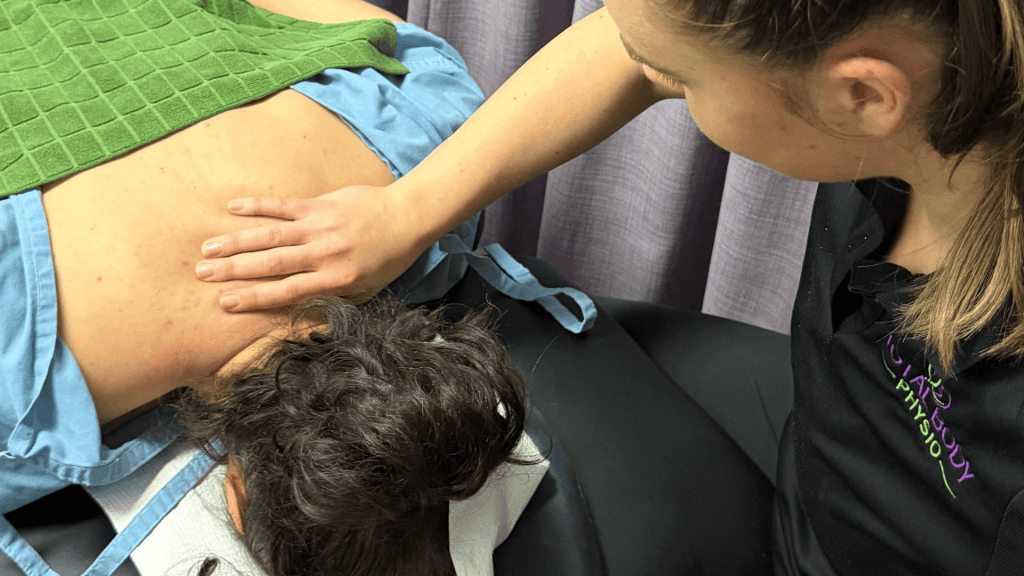
WHAT ABOUT HER POSTURE?
Michelle also demonstrated a noticeable forward head posture, particularly when fatigued. However, our approach was not simply to tell her to “sit up straight”. There is no single perfect posture that needs to be maintained all day. Instead, we wanted Stacey to develop enough neck and shoulder endurance to tolerate different positions throughout her working day and to regularly move and change position.
Her initial neck flexor endurance was only 14 Seconds.
So rather than constantly correcting her posture, we focused on improving her ability to control and tolerate different positions.
Research also suggests that scapular-focused rehabilitation may influence forward head posture, although posture should not be considered in isolation from pain, function and physical capacity.
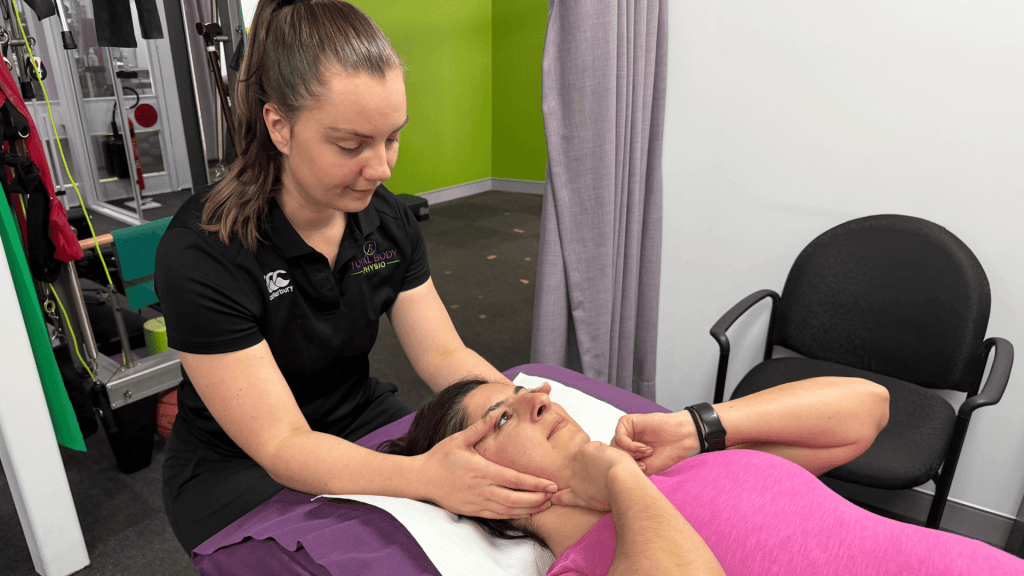
REBUILDING HER CAPACITY
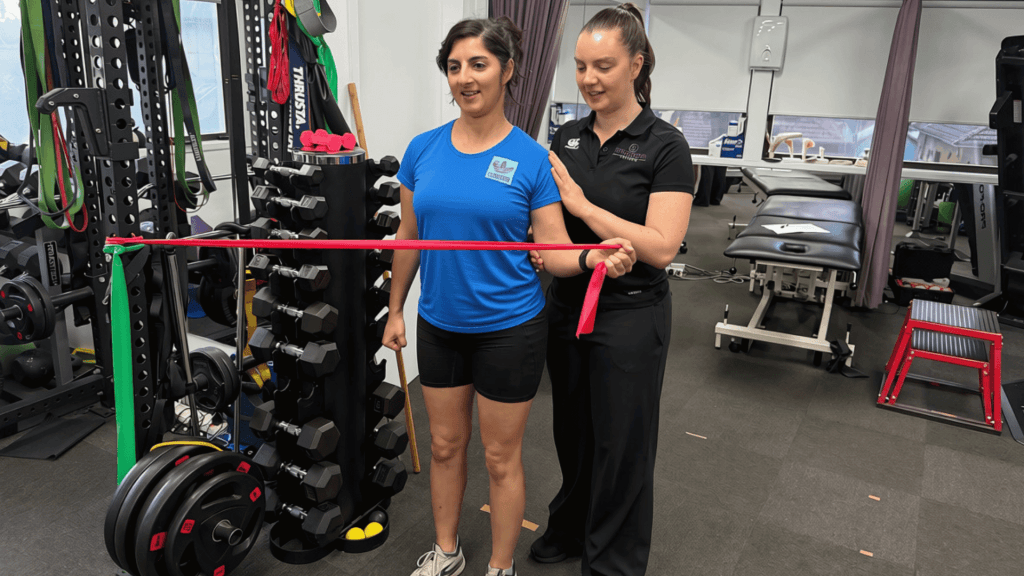
STAGE 1: SETTLE THE FLARE-UP
Initially, treatment focused on reducing irritability and improving movement.
This included:
- Soft tissue treatment
- Joint mobilisation
- Dry needling
- Deep neck muscle control
- Scapular stability
- Rotator cuff strengthening
- Neck endurance
Exercise was introduced early rather than waiting for all symptoms to disappear.
Deep cervical flexor training has demonstrated improvements in neck muscle endurance, pain and function in people with persistent neck pain (Iqbal et al., 2021).
Once Michelle was comfortable with the initial exercises, she was introduced to modified Pilates and yoga.
She initially avoided loaded crunch positions and prolonged overhead holds.
STAGE 2: BUILD THE MISSING CAPACITY
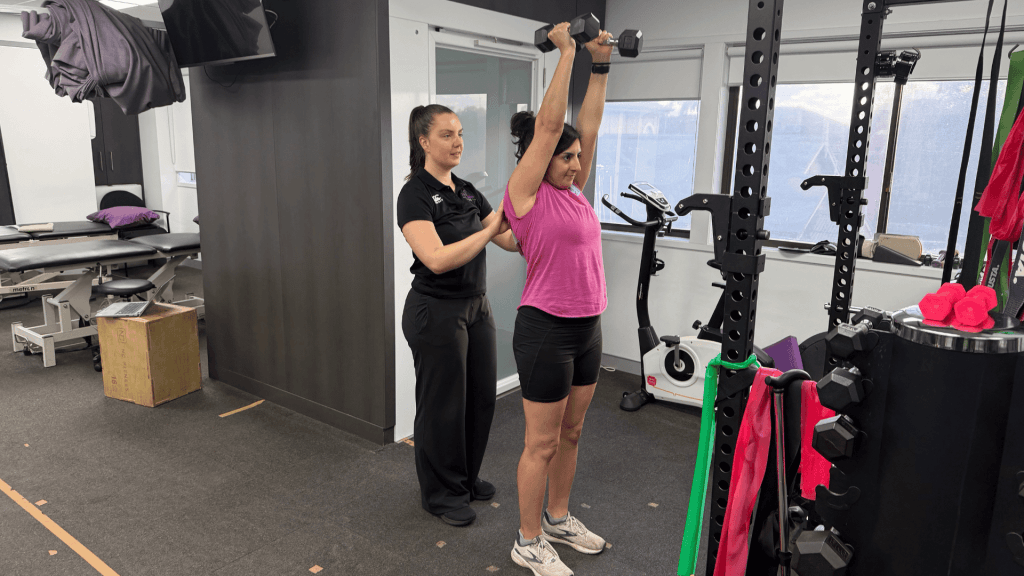
Once Michelle’s symptoms settled, the rehabilitation became progressively harder.
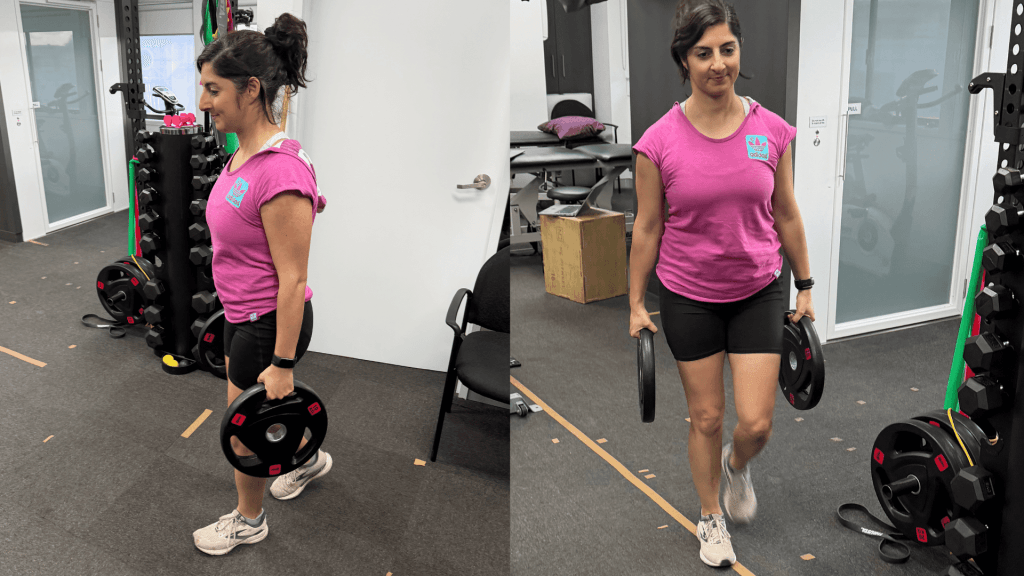
Her shoulder strengthening progressed from easier positions with the arm by her side towards more
demanding positions around shoulder height.
Her program included:
- Theraband and weighted shoulder exercises
- Rows and pulldowns
- Scapular control exercises
- Rotator cuff strengthening
- Progressive neck endurance exercises
- Loaded carries
The key was progressive loading.
Doing the same light exercises indefinitely does not necessarily prepare someone to carry a heavy suitcase, perform an overhead yoga position or complete a demanding Pilates class. Rehabilitation needs to gradually expose the body to the loads it will eventually be required to tolerate.
(Dalager et al., 2023).
STAGE 3: TRAIN FOR REAL LIFE
The final stage was about making rehabilitation specific to Michelle’s goals.
We progressed towards:
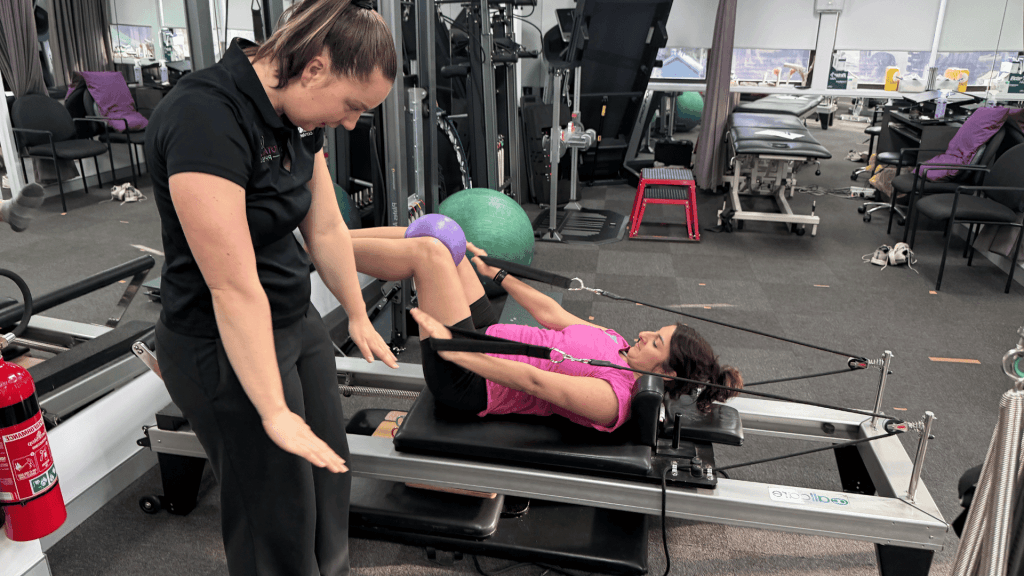
- Full reformer Pilates
- Crunch-position exercises
- Overhead yoga positions
- Above-head lifting
- Heavier carrying
- 15 kg farmer carries in each hand
If carrying luggage had previously triggered her symptoms, we wanted to train that capacity before her next trip, rather than waiting to see what happened.
Pilates and yoga can also be useful components of rehabilitation for persistent neck pain, with research supporting improvements in pain, function, mobility and muscle endurance.
(Gao et al., 2024)
THE RESULTS
Pain was only one measure of progress.
Because symptoms can improve before strength, endurance and physical capacity have fully recovered, we continued to objectively measure the things that mattered to Michelle
The biggest objective change?
Shoulder strength at shoulder height improved from:
69% → 94% SYMMETRY
This was particularly meaningful because this was where her largest initial deficit was identified.
WHERE IS MICHELLE NOW?
- Michelle is now back doing full reformer Pilates, including the crunch-position exercises she had avoided for years.
- She can carry 15 kg in each hand without symptoms.
- She has also travelled interstate and managed her own luggage without experiencing the flare-up she had become accustomed to.
- Her desk tolerance has improved considerably.
She now has a simple six-exercise maintenance program taking approximately 15 minutes, 2–3 times per week, alongside her regular Pilates and yoga.
After almost 10 years of recurring symptoms, the biggest win wasn’t simply that her neck felt better. She understood what appeared to be contributing to her symptoms and, importantly, had a practical strategy for managing her capacity moving forward.
The Take-Home Message
For recurrent neck pain, treating the neck is important, but we also need to look at the bigger picture. Shoulder blade function, rotator cuff strength, neck endurance and overall capacity may all influence how much load ends up going through the neck.
Michelle’s case highlights the value of testing movements that reflect real life. Her shoulder strength looked reasonable with her arm by her side, but at shoulder height a significant deficit became clear, which changed the direction of her rehabilitation.
Our aim is not just to settle the latest flare-up. It’s to
identify contributing factors, measure deficits, rebuild capacity and prepare patients for the activities they want to return to.
EXPERIENCING RECURRENT NECK PAIN?
If neck pain keeps coming back, a physiotherapy assessment can look beyond the painful area to identify the strength, mobility and movement factors that may be contributing to the problem.
If you’re frustrated by ongoing pain despite a normal scan, don’t assume you simply have to live with it. Our team can help identify what’s driving your symptoms and develop a clear plan to get you back to doing the things you enjoy.
If you or someone you know is suffering from an injury, a niggle or persistent pain that just isn’t improving, we’d love to help. Give us a call on (02) 9713 2455 or click below to Book Online.