
Returning to Site Work After a Large Rotator Cuff Repair
Pino is a 63-year-old self-employed gyprocker whose work demands strength, lifting and frequent overhead activity.
After a fall on site, Pino sustained a large supraspinatus tear and rupture of the long head of his biceps tendon. He underwent a double-row rotator cuff repair and spent six weeks in a sling.
He came to us following his 6-week post-operative surgical review, ready to begin rehabilitation and, most importantly, work towards getting back to the job he loves.
His goal was simple: return to work pain-free and get back to his pre-injury duties.
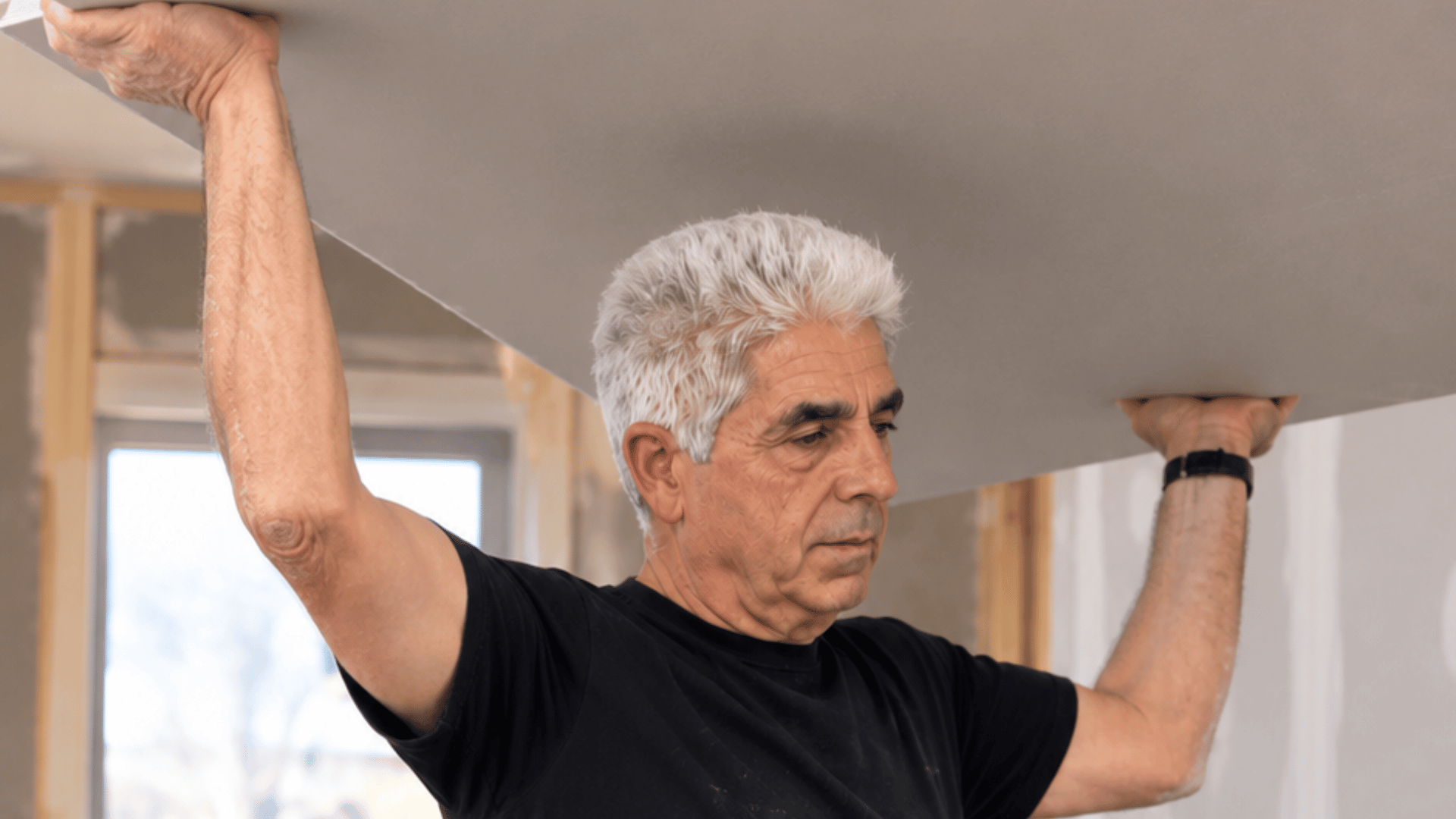
At a glance
Patient: 63-year-old self-employed gyprocker
Injury: Large supraspinatus tear and long head of biceps rupture following a fall at work
Surgery: Double-row rotator cuff repair
Rehabilitation goal: Return to pre-injury work duties
Outcome: Cleared by his surgeon for pre-injury duties
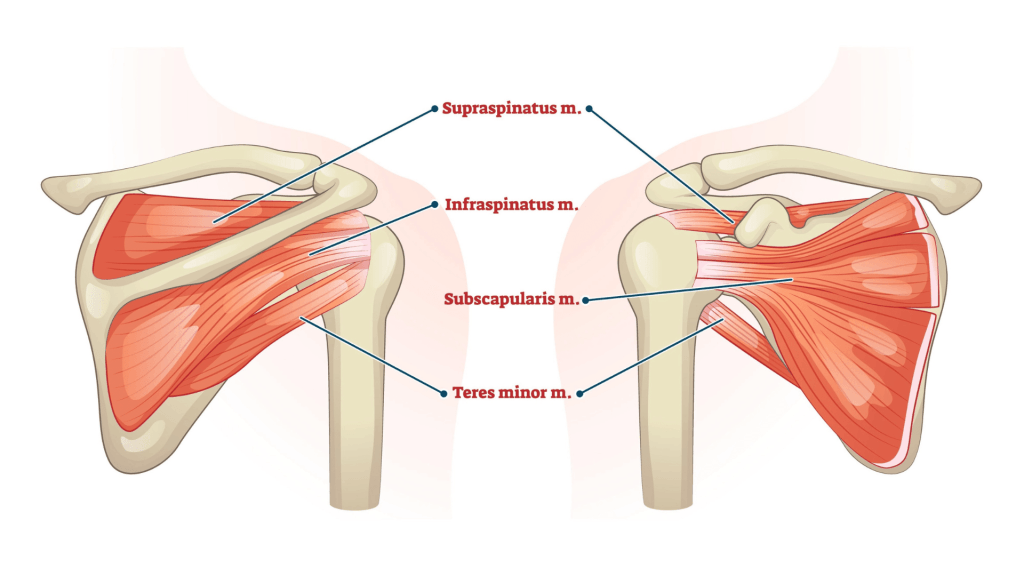
WHAT IS THE ROTATOR CUFF?
The rotator cuff is a group of four muscles and tendons that surround the shoulder joint. They keep the ball centred in its shallow socket and work with the larger shoulder muscles to control the arm during lifting and reaching (Akhtar et al., 2021).
When a rotator cuff tear becomes symptomatic, it can cause pain, weakness and reduced control, particularly when lifting the arm or working overhead. For a gyprocker, these movements are essential parts of the job.
WHAT THE SURGEON FOUND
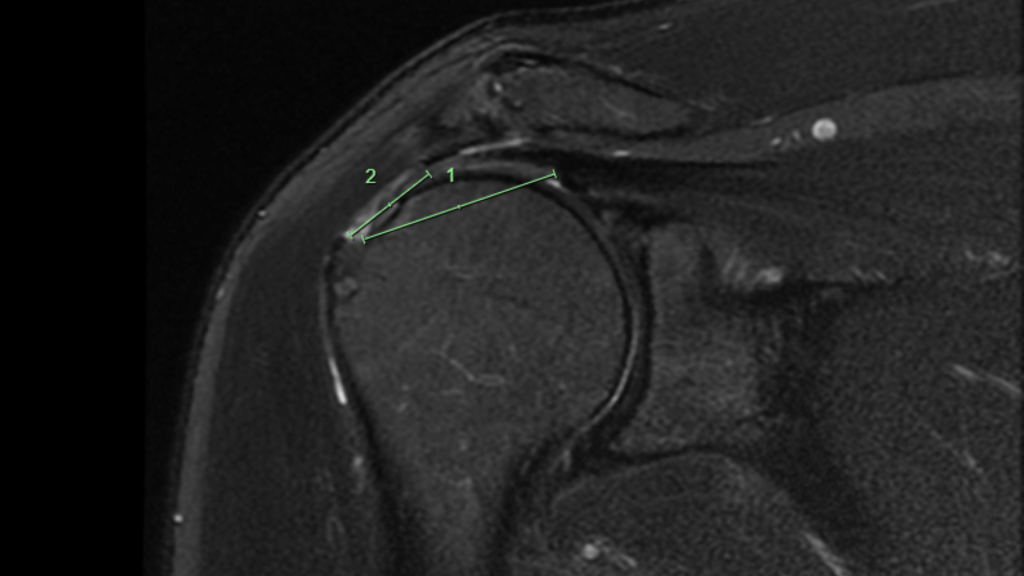
Pino’s supraspinatus tear was large, measuring 4 cm wide and retracted by approximately 3 cm. The tendon tissue was thin and worn, and the long head of his biceps had also ruptured.
Given the tear’s size and retraction, its effect on Pino’s strength and the physical demands of his work, surgical repair was considered the most appropriate option. Large tears can progress and develop muscle atrophy and irreversible fatty changes, potentially making a later repair less successful (Lapner et al., 2023).
The surgeon cleared the thickened bursa, reshaped part of the acromion and reattached the tendon to the bone using a double-row repair.
HEALING REMAINED A SIGNIFICANT CHALLENGE
Retear rates are approximately 37% for large to massive tears, compared with 12.5% for small to medium tears, with risk also increasing with age (Longo et al., 2021).
From day one, rehabilitation required a careful balance between protecting the repair and progressively rebuilding strength.
WHAT WE FOUND
At 7 weeks post-op, Pino presented with:
- Passive shoulder flexion of 70 degrees and abduction of 56 degrees
- External rotation of 29 degrees
- Night pain, waking several times a night
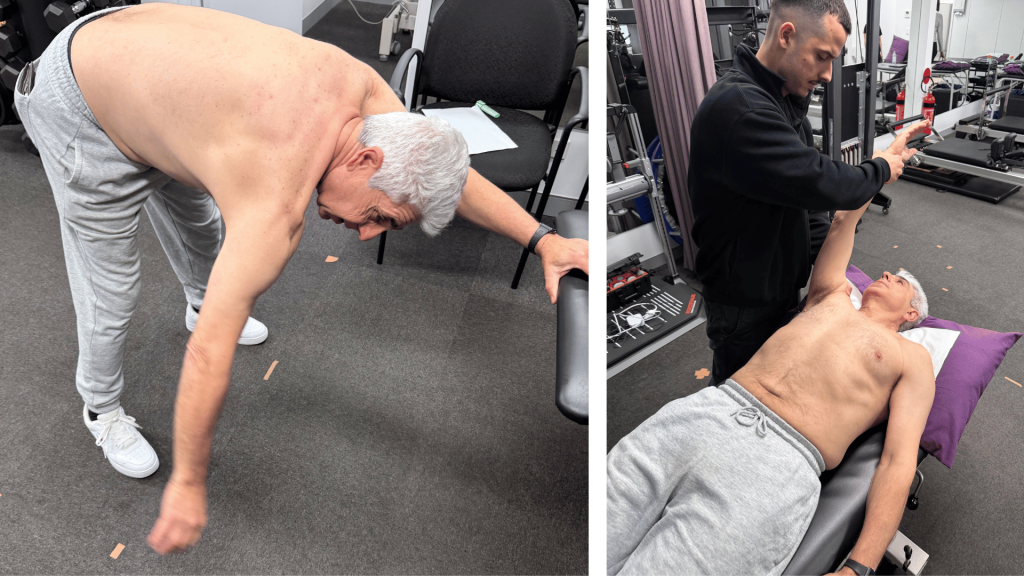
THE REHABILITATION JOURNEY
Rehabilitation followed the surgeon’s protocol. Each stage was progressed on pain response and objective testing, not just the calendar.
Job demands matter after cuff repair. Across more than 1,200 patients, around 62% returned to their previous level of work, with lower rates in more physically demanding jobs (Haunschild et al., 2021).
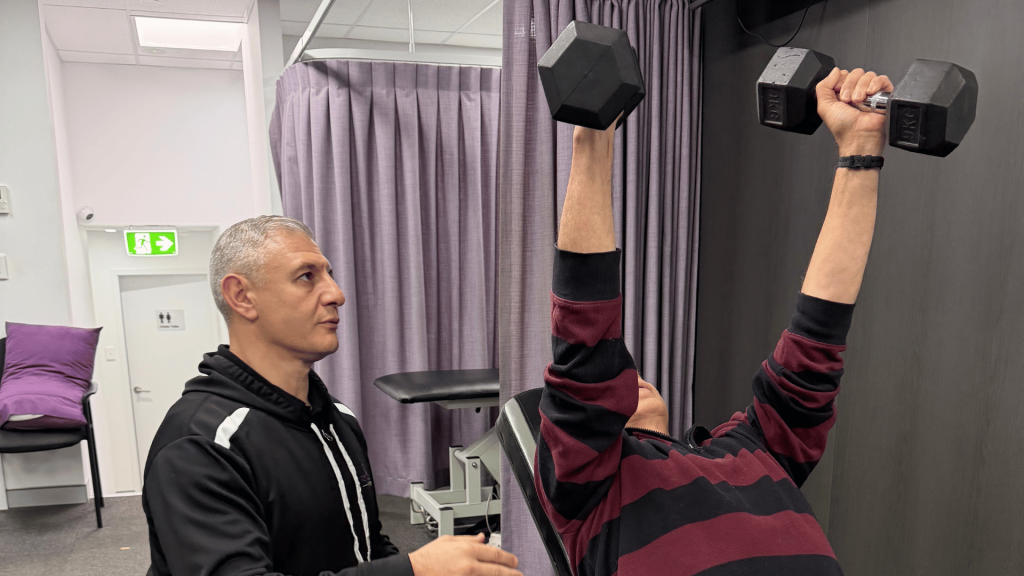
That’s why Pino’s final stage was built around the overhead strength his work requires. Progression was based on clear targets: external rotation strength of at least 90% of the other side, and 10 to 15 kg of overhead lifting capacity.
WORKING WITH HIS SURGEON AND GP
At 6 months, his surgeon cleared him for light duties with a 5 kg lifting limit and no overhead work. At 9 months, given the size of the tear and the condition of the tendon, his surgeon recommended permanent light duties, but allowed rehabilitation to continue.
We continued progressive loading within the surgical guidelines and kept his surgeon, GP and insurer updated with objective strength data through regular progress reports.
REBUILDING HIS SHOULDER
STAGE 1: RESTORE MOVEMENT
Week 6-12: Restore movement safely
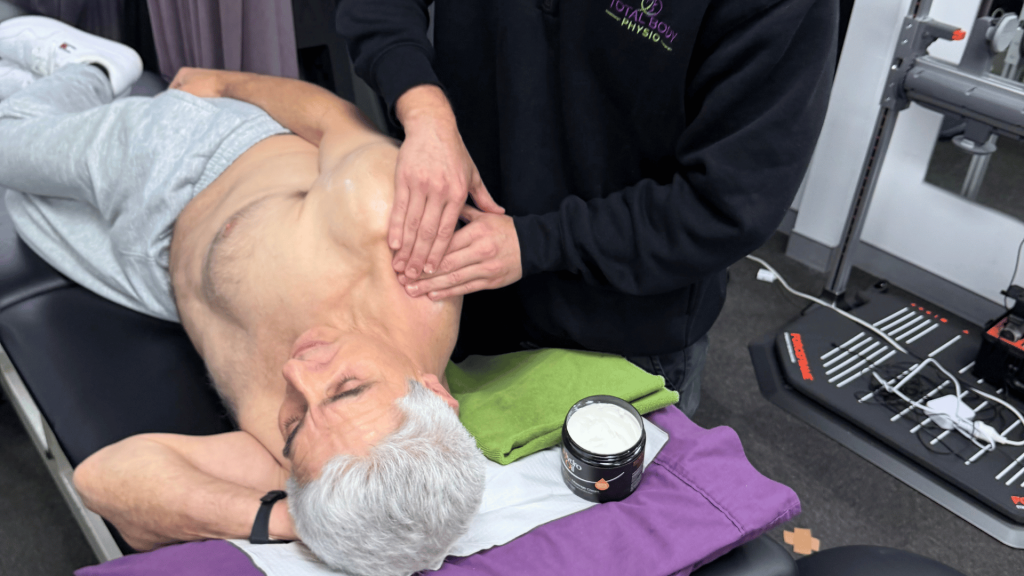
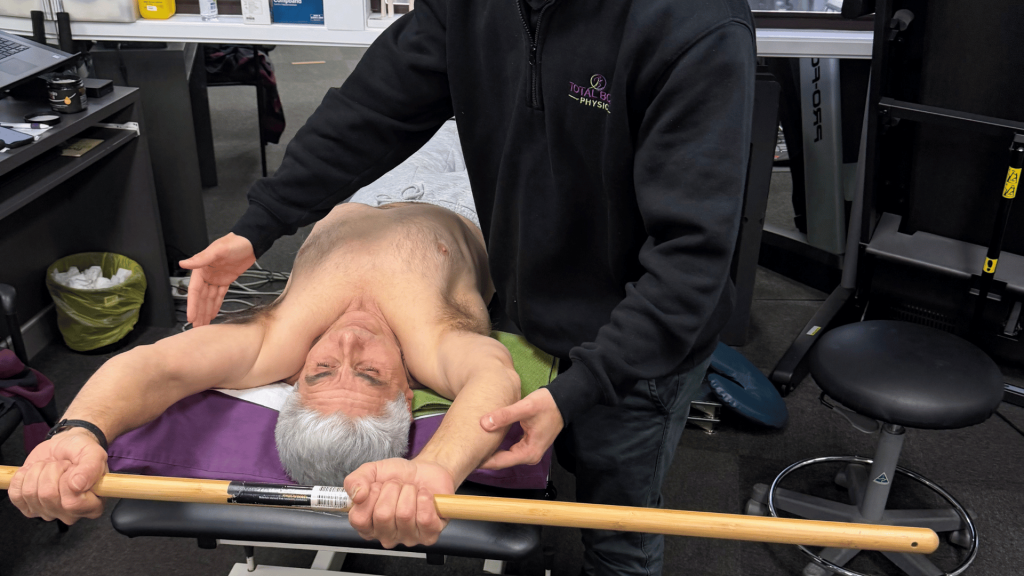
Soft tissue work helped settle pain and muscle guarding, followed by passive and assisted shoulder movement.
Pendulums, table slides and pulleys progressed alongside scapular stability exercises.
Early movement after rotator cuff repair has been linked to better flexion and abduction. (Hu et al., 2023)
By week 11, Pino’s flexion had improved from 70° to 160°, allowing progression to active arm movement.
STAGE 2: REBUILD THE CUFF
Week 12-24: Rebuild the cuff and shoulder blade
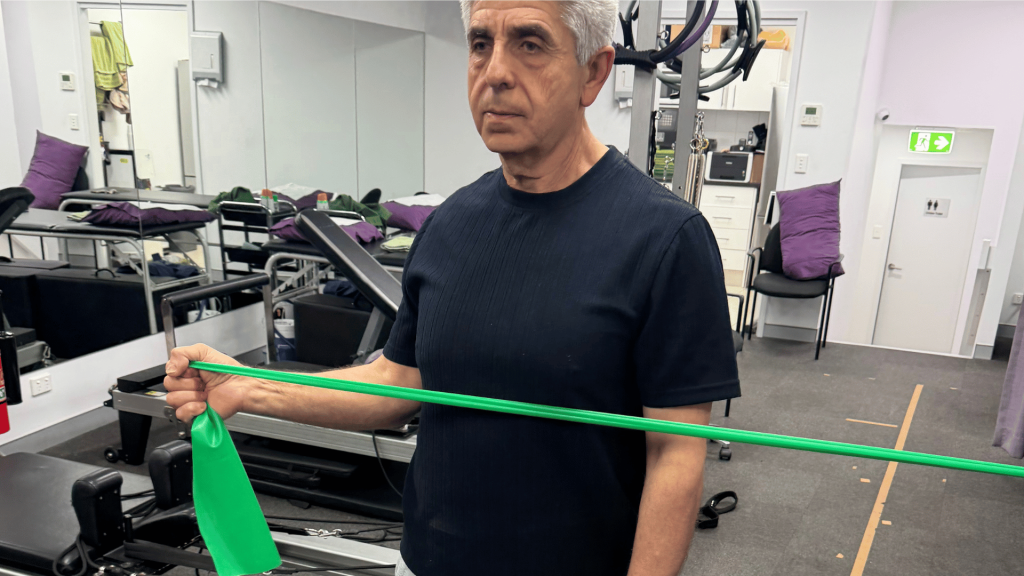
Strengthening began with isometrics, Theraband work, side-lying external rotation with light dumbbells, rows, pull-aparts, Y-raises and push-up progressions from wall to knees.
Scapular and rotator cuff strengthening were progressed through increasing range and load.
STAGE 3: LOAD FOR WORK
Week 24+: Load for work
Pino moved into a structured gym program three to four days a week: chest press, lat pulldowns, rows, push-ups, progressive overhead pressing, and weighted external rotation with the arm at shoulder height.
Trunk and shoulder stability work, joint mobilisation and education on pacing at work rounded out the program.
OBJECTIVE OUTCOMES: MEASURING WHAT MATTERS
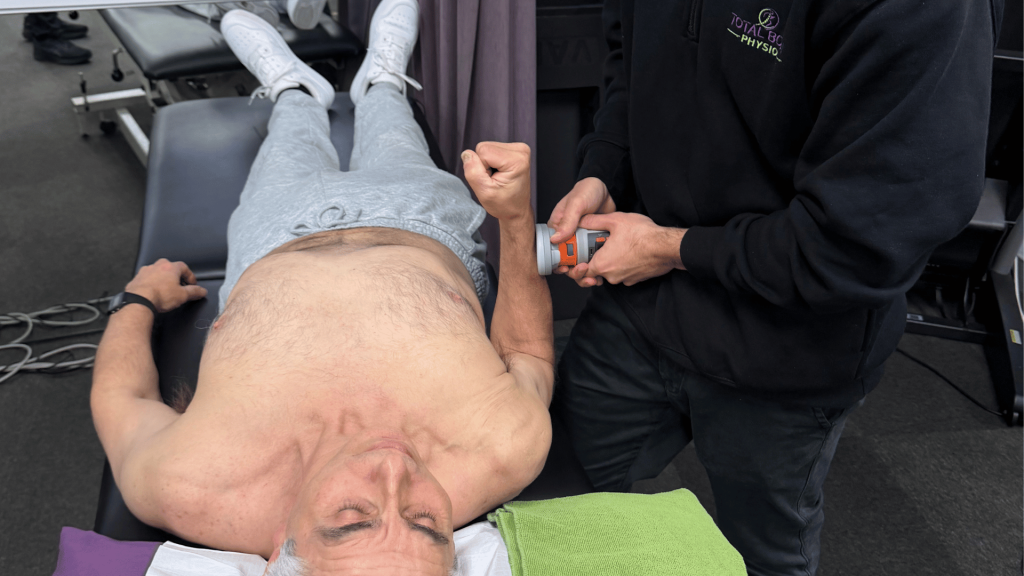
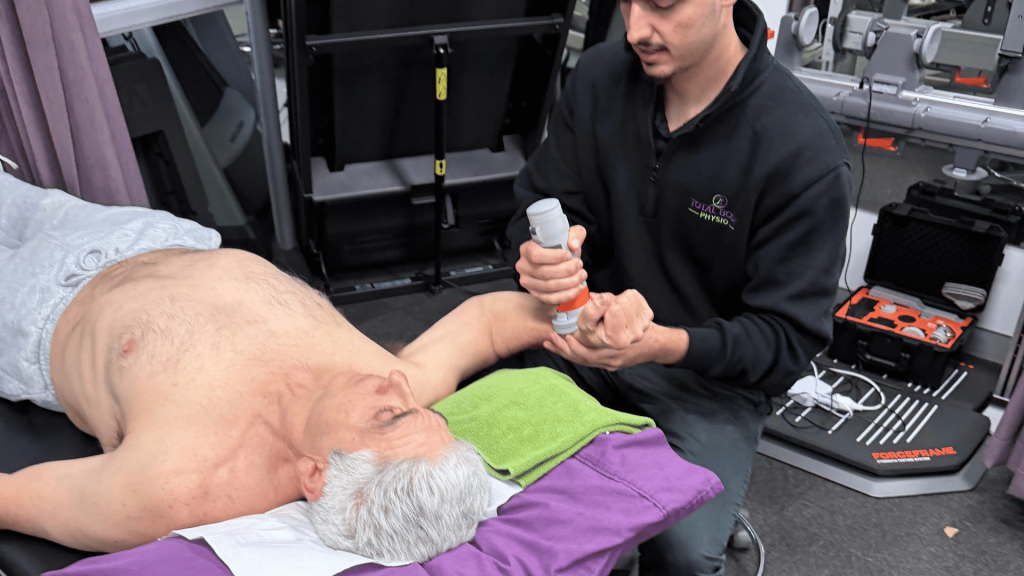
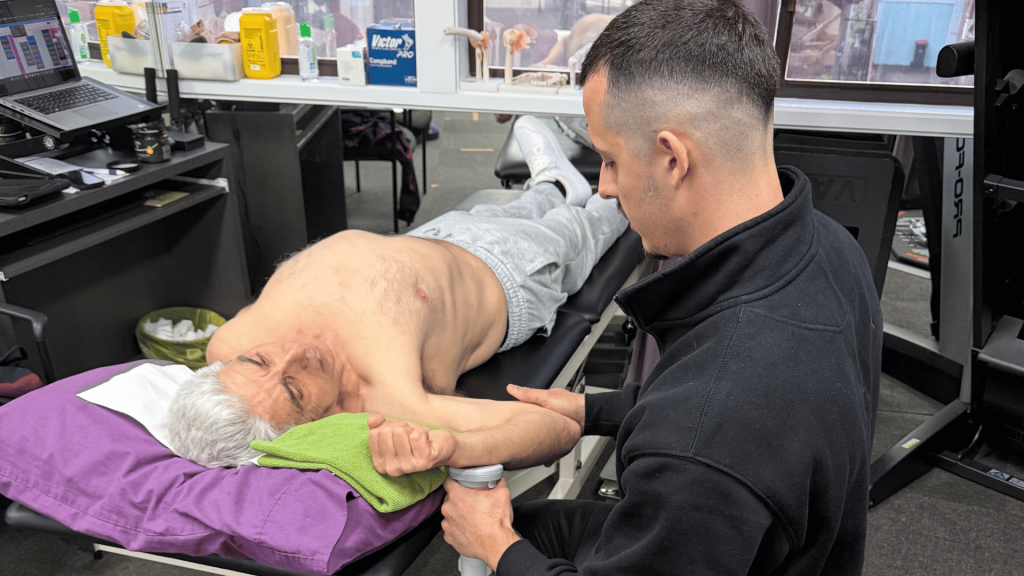
Strength was tracked using handheld dynamometry, which shows very high agreement with laboratory-grade testing for shoulder rotation strength (Chamorro et al., 2021). In our clinic we now use VALD strength testing equipment.
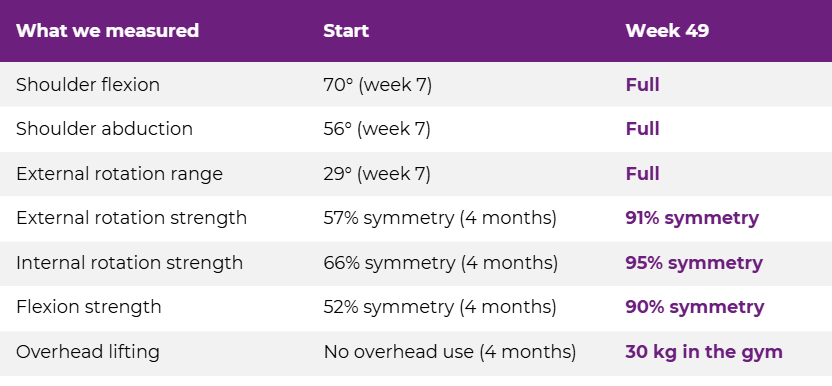
The biggest objective change?
External rotation strength improved from:
57% → 91% SYMMETRY
Target of 90% achieved.
WHERE IS PINO NOW?
By week 49, Pino’s strength was within 10% of his other side on every measure. He was lifting 30 kg overhead, and pressing 30 to 40 kg without pain.
After we assessed him, he returned to his surgeon for a review of his restrictions and was deemed fit for pre-injury duties.
He was subsequently discharged from physiotherapy with a self-management program to keep building strength and capacity independently
KEY TAKEAWAYS
- Large, retracted cuff tears in older workers carry a higher retear risk. Early protection and gradual, structured loading matter. (Longo et al., 2021)
- Recovery after cuff repair takes months, not weeks. Pino’s strength and overhead capacity kept improving well beyond the 9-month mark.
- Feeling better does not necessarily mean being ready. At 4 months Pino reported no issues, yet his external rotation strength was only 57% of his other side.
- Rehabilitation should reflect the person’s work, sport or lifestyle. Because Pino needed to work overhead, overhead strength was progressively trained and objectively tested. (Haunschild et al., 2021)
- Regular objective testing and progress reports give GPs, surgeons and insurers clear data to guide work capacity decisions.
RECOVERING FROM SHOULDER SURGERY?
If a shoulder injury or surgery is affecting your work, a physiotherapy assessment can measure your strength and build a rehabilitation plan around the demands of your job.