
Returning to Rugby After a Quadriceps Muscle Tear
Patient:
James, 29-year-old Rugby player
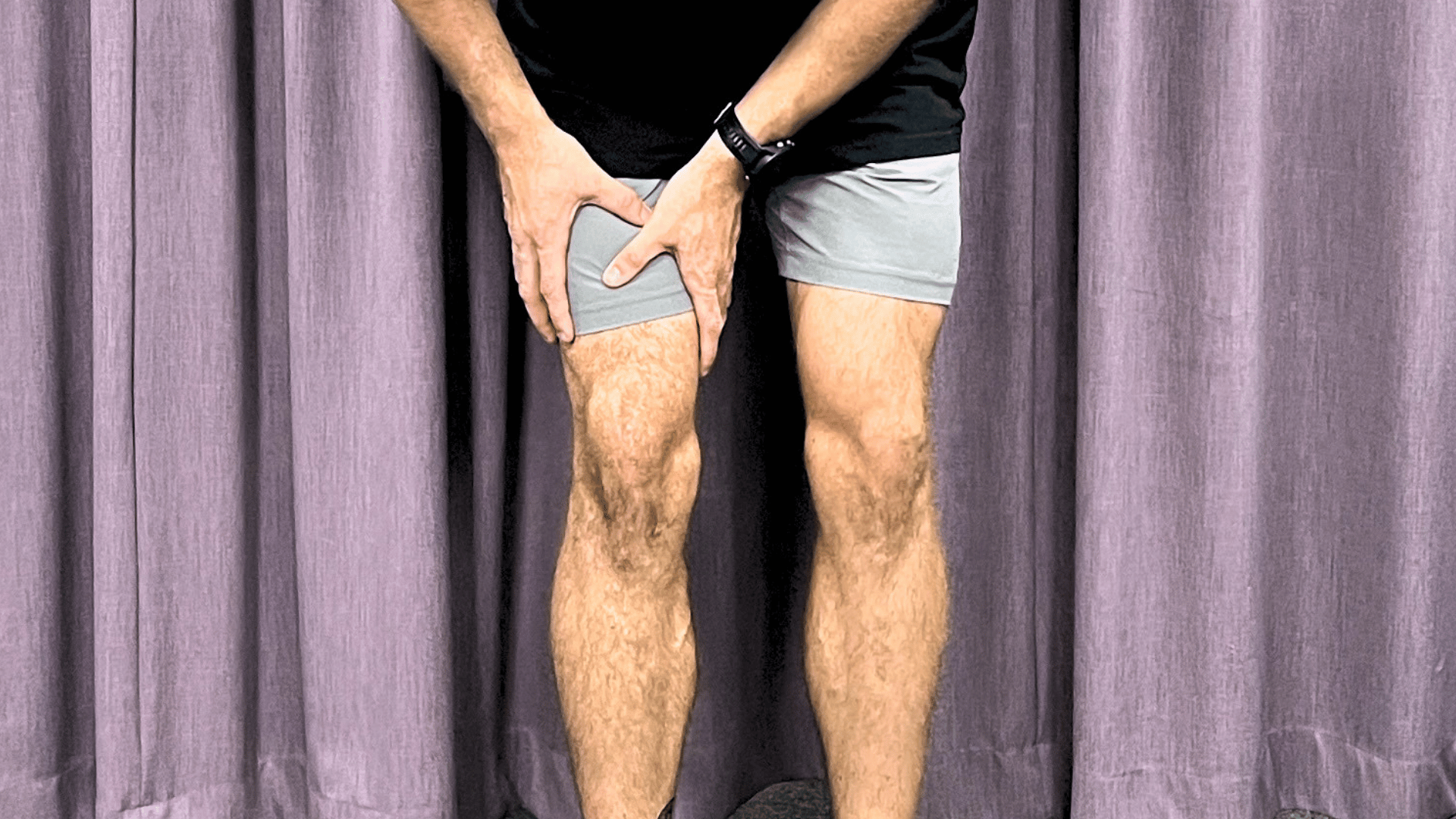
James, a 29‑year‑old recreational rugby player presented to Total Body Physio with right thigh pain that had forced him to stop training, sprinting, and playing rugby. Two weeks earlier, he felt a sudden sharp “pull” in the front of his thigh while accelerating during a match, followed by tightness, swelling, and bruising.
In the lead‑up, he had rapidly increased his training frequency, match intensity, and extra running after the off‑season. Attempts to return to training were cut short by sharp pain with sprinting, kicking, and stair climbing, prompting him to seek a physiotherapy assessment.
What We Found
Clinical assessment identified:
- Localised tenderness and mild swelling over the mid‑belly of rectus femoris
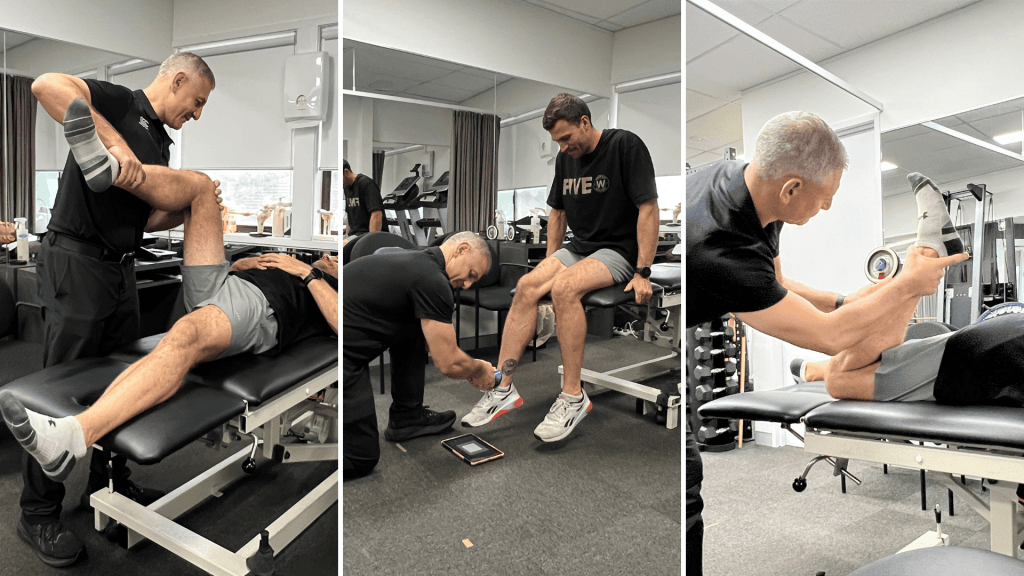
- Pain with active knee extension and resisted hip flexion
- Reduced tolerance to single‑leg loading, split squats, and lunge positions
- Protective running pattern with shortened stride length
Assessment also identified contributing kinetic chain factors including reduced gluteal strength and calf capacity on the injured side, which can increase quadriceps loading during sprinting and acceleration. (Willy et al., 2021)
Objective AxIT testing showed a marked quadriceps strength deficit on the injured side: left (uninjured) 41kg vs right (injured) 30kg, representing a 26% deficit and limb symmetry index of 74%. There was no palpable defect, no major functional loss, and no suspicion of tendon avulsion. Findings were consistent with a moderate (Grade II) rectus femoris strain, and clinical assessment plus objective strength testing were sufficient to guide management without imaging (Buckthorpe et al., 2021).
Understanding
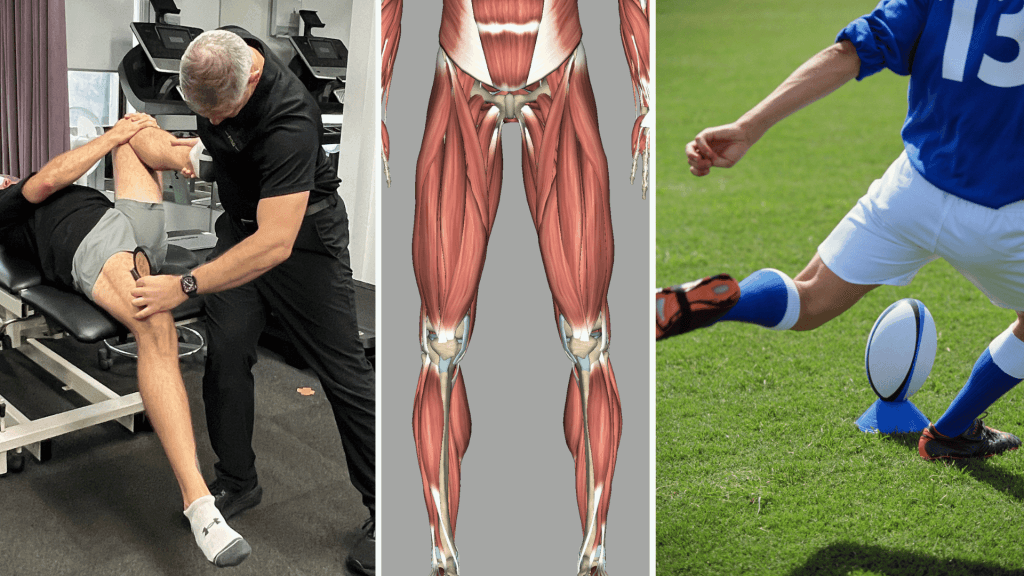
The rectus femoris is the most commonly injured quadriceps muscle in field‑sport athletes because it crosses both the hip and knee joints and is exposed to high eccentric loads during sprinting and kicking (Mendiguchia et al., 2017). Rapid increases in training volume or intensity, inadequate preseason preparation, and limited sprint exposure are recognised risk factors for quadriceps strains in running and kicking sports (McAleer et al., 2022). Persistent symptoms after muscle injury are often driven more by reduced load capacity and protective movement strategies than by ongoing tissue damage, which supports an active, loading‑based approach rather than prolonged rest (García et al., 2024; Buckthorpe et al., 2021).
The Plan
Rehabilitation aimed to restore quadriceps strength and load tolerance while preparing James for rugby‑specific sprinting and kicking demands.
Early Phase
Goals: Reduce pain and restore baseline function without aggravating symptoms.
- Temporary pause from rugby and high‑speed running
- Manual therapy and dry needling to reduce pain and muscle guarding
- Gentle mobility work and pain‑free quadriceps isometrics to maintain activation
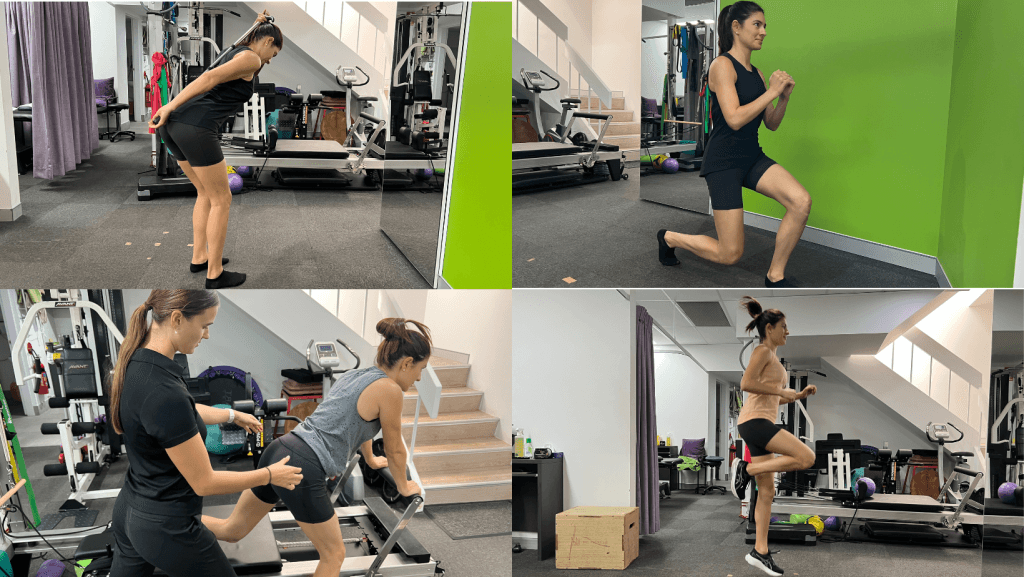
- Activation exercises to address kinetic chain deficits in calf and gluteals
- Education that early controlled loading is safe and beneficial for muscle healing, with realistic timelines and load‑management advice (Buckthorpe et al., 2021)
Strength and Running Progression
Goals: Increase strength, running capacity, and neuromuscular control.
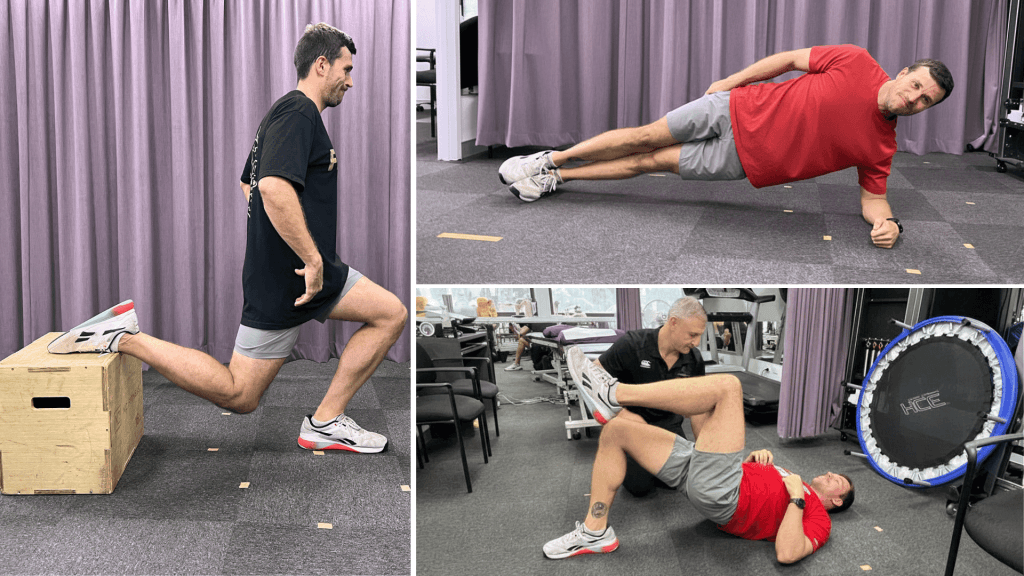
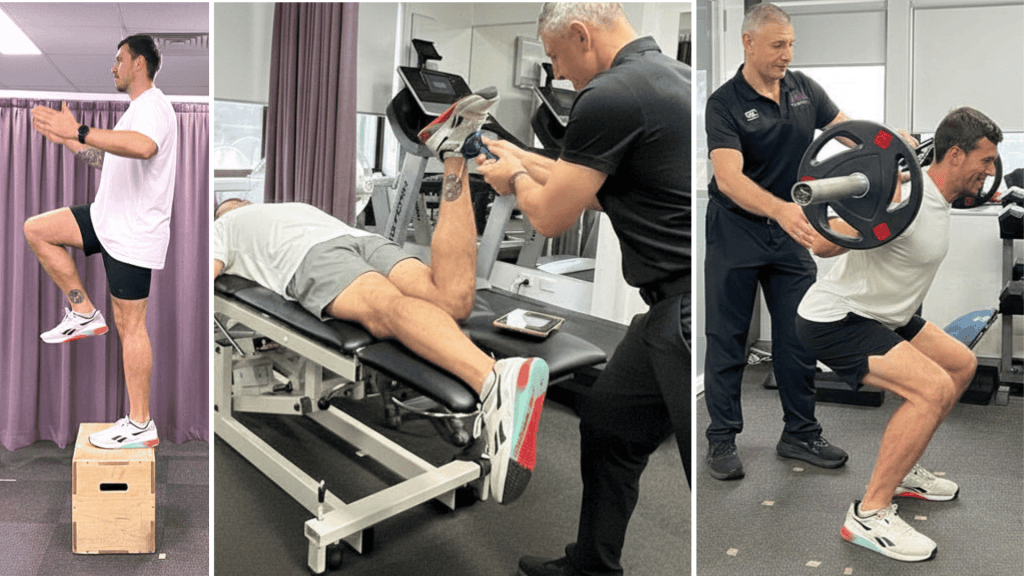
- Strengthening progressed to split squats, step‑ups, Spanish squats, and controlled knee extension at moderate‑to‑long muscle lengths, targeting rectus femoris more specifically than general squats alone (Mendiguchia et al., 2017)
- Hip and trunk strengthening progressed to support lower‑limb load distribution
- Running was reintroduced from jogging to submaximal accelerations in a graded manne
AxIT testing was repeated at week four: left 41.2kg vs right 36kg, reducing the deficit to approximately 12%. Objective monitoring allowed progression to heavier loading and more demanding running drills once strength reached acceptable asymmetry thresholds (Buckthorpe et al., 2021).
Restore and Return‑to‑Play Phase
Goals: Prepare for full match demands and reduce reinjury risk.
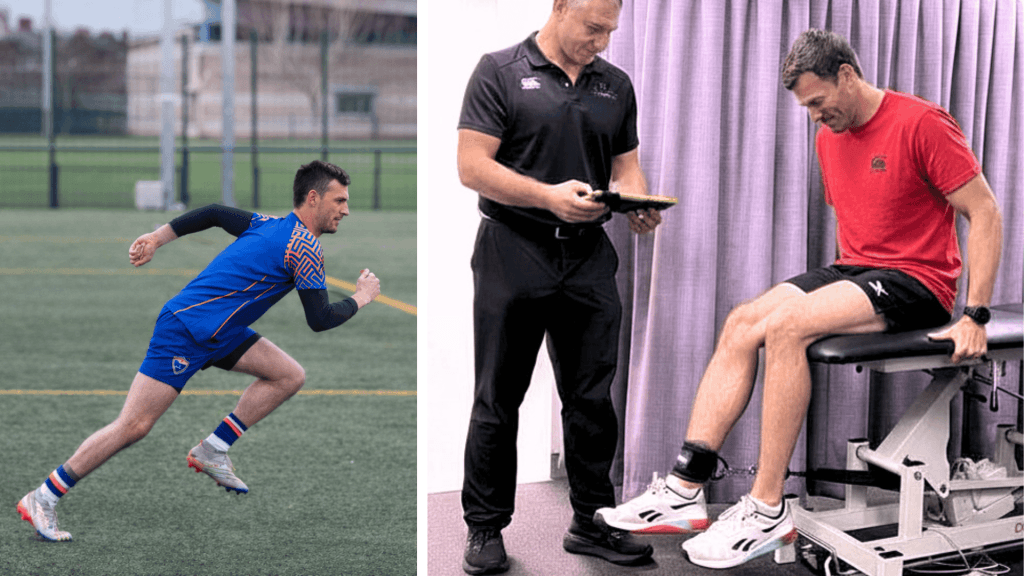
- Sprinting and repeated sprint efforts, kicking drills, plyometrics, and change‑of‑direction training
- Emphasis on eccentric quadriceps loading to reflect sprint and kicking demands
Progression was criteria‑based rather than time‑based, using:
- AxIT quadriceps strength symmetry (target ≥95% limb symmetry index)
- Symmetrical single‑leg loading on functional tasks
- Pain‑free maximal sprinting and sport‑specific drills
Criteria‑based return‑to‑sport approaches using objective strength and functional benchmarks are increasingly recommended to lower reinjury risk in athletes with thigh muscle injuries (Bogwasi et al., 2023).
Progression Phase
Across eight weeks, James demonstrated measurable improvement:
- Pain‑free stair climbing and gym strengthening by week 3
- Progression from jogging to full‑speed sprinting by week 6
- AxIT quadriceps symmetry restored by week 7: left 42kg vs right 40kg (96% limb symmetry index)
A limb symmetry index of ≥95% on objective strength testing aligns with return‑to‑sport thresholds reported for high‑speed field sports and rectus femoris injury cohorts (Buckthorpe et al., 2021; McAleer et al., 2022). James returned to full team training and match play by week 8 with full confidence in sprinting and kicking and a clear self‑management and load strategy for the season ahead.
Key Clinical Takeaways
- Rectus femoris strains are common in running and kicking sports and often relate to rapid load spikes and limited sprint exposure (Mendiguchia et al., 2017; McAleer et al., 2022)
- Progressive loading and early activation are preferable to prolonged rest after quadriceps muscle injury (Buckthorpe et al., 2021)
- Targeted rectus femoris strengthening at appropriate muscle lengths is needed in addition to general lower‑limb exercises (Mendiguchia et al., 2017)
- Objective dynamometry (e.g. AxIT) provides clear criteria for progression and return‑to‑play decisions (Buckthorpe et al., 2021; González‑de‑la‑Flor & García‑Pérez‑de‑Sevilla, 2024)
- Criteria‑based, sport‑specific rehabilitation supports safe return to sport and may reduce reinjury risk (Bogwasi et al., 2023; McAleer et al., 2022)
If a qudricep or muscle injury is limiting your training or performance in sport, a clear diagnosis, progressive rehabilitation, and an objective, criteria‑based return‑to‑play plan can help you return stronger and more confident.
If you or someone you care for has an injury, a flare up, requires some rehabilitation or experiences an increase in pain, give the clinic a call on 9713 2455 or book online.